
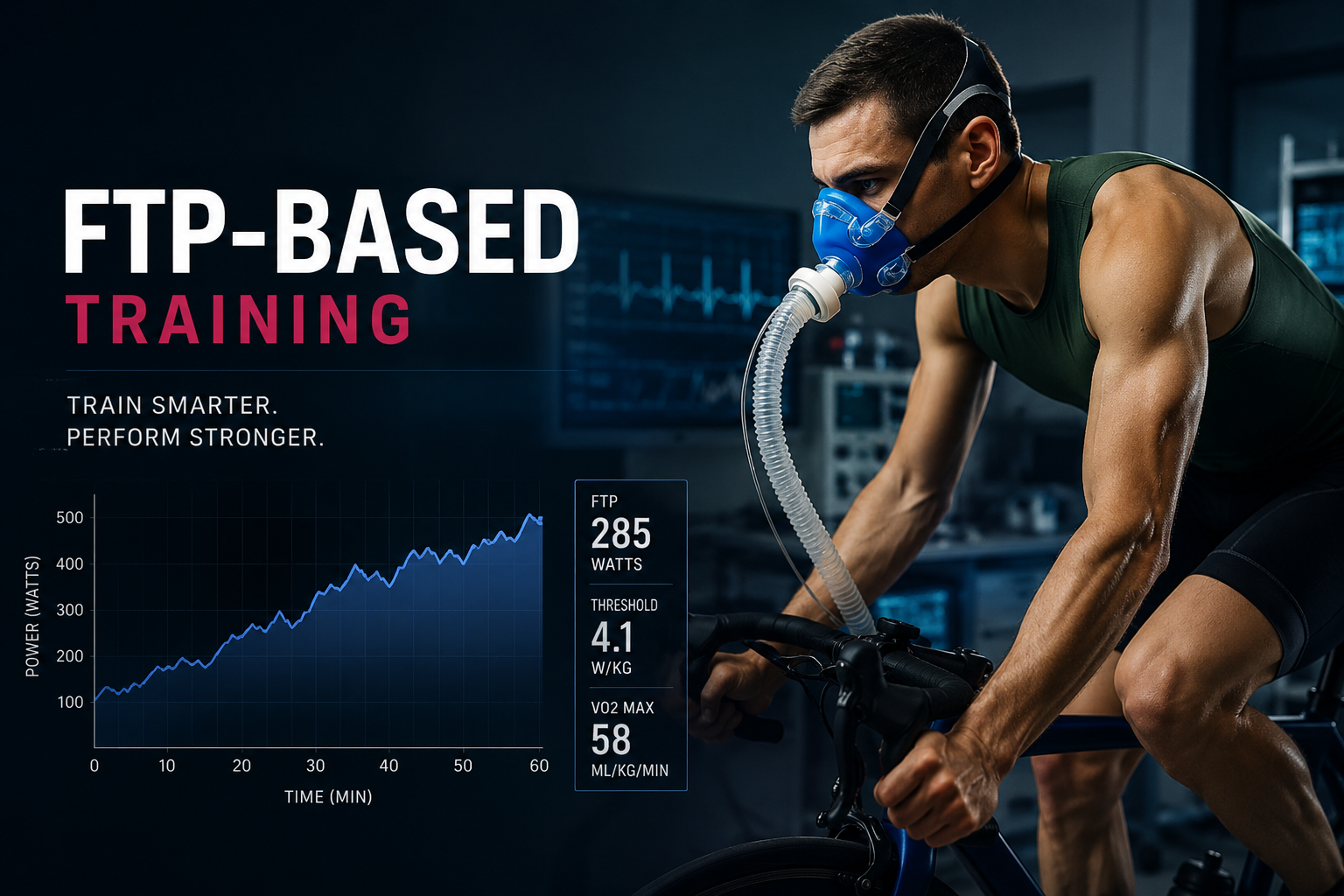

What is FTP in Triathlon? How to Test, Train, and Race with Powers
Most triathletes train by feel and end up either sandbagging the bike or blowing up before the run. FTP fixes that. Learn how Functional Threshold Power (FTP) transforms endurance training for cyclists and triathletes.
This science-backed guide explains lactate threshold, energy systems, and structured power-based workouts that boost speed, efficiency, and race-day performance.
Common Mistakes
Avoid common transition mistakes, such as forgetting gear or taking too long to change.
Introduction
Most triathletes train by feel — and most triathletes blow up on the run. The reason is almost always the bike leg.
Without an objective measure of your aerobic limit, you either ride too easy and leave time on the course, or ride too hard and pay for it by kilometer 5 of the run. Functional Threshold Power (FTP) solves this.
It gives you a precise, personal number that anchors every training session and every race-day pacing decision. This guide explains what FTP actually is, how to test it properly, and exactly how to use it in triathlon training and racing.
FTP and Lactate Threshold
- Lactate Threshold (LT)
- This is the exercise intensity where blood lactate begins to rise above resting/ baseline values.
- It marks the transition from predominantly aerobic metobolism to increasing anaerobic contribution.
- Maximal Lactate Steady State (MLSS)
- Represents the highest sustainable exercise intensity at which lactate production and clearance are balanced.
- Go above MLS→ lactate accumulates progressively, fatigue sets in quickly.
- Stay just below MLSS→ lactate remains relatively stable, allowing prolonged effort.
- Functional Threshold Power (FTP)
- FTP is the highest average power an athelete can sustain for ~60 minutes in a field setting.
- Correlates strongly with MLSS (r ≈ 0.8- 0.9).
- FTP is practical→ no need for blood lactate measurement, yet it approximates the lab-based threshold.
✅ Key Point : FTP ≈ MLSS → a functional, performance-based way to measure the aerobic limit.
Oxygen Uptake and Mitochondrial Function at FTP
At or near FTP:
- Mitochondrial Oxidation
- Mitochondria (yes... the powerhouse of the cell you remember from Middle School) are working at near-maximal rates to oxidize carbohydrate (glycolysis→ pyruvate → acetyl-CoA) and fat (β-oxidation).
- This supports high ATP turnover without runaway lactate accumulation.
- Lactate Shuttling (MCT Transporters)
- Not all lactate is "bad" — it serves as a fuel shuttle.
- Intramuscular lactate can be transported between fibers (fast-twitch → slow-twitch) or into mitochondira to be oxidized.
- This recylcing delays fatigue by preventing accumulation in blood and muscle.
- Oxygen Uptake (VO₂ Kinetics)
- At FTP, VO₂ rises and plateaus just below VO₂ max.
- The system is operating close to full aerobic capacity, but not at maximal oxygen turnover.
- Any further increase in intensity would require more anaerobic contribution, destabilizing lactate balance.
✅ Key Point: FTP reflects the point where aerobic metabolism, lactate recylcing, and oxygen kinetics are all maximized and balances, but not yet overwhelmed.
Said differently, FTP is your cycling red line — go above it too long, and you'll blow up. Stay just under it, and you'll ride stong for hours.
FTP as a Functional Expression of Aerobic Capacity
- FTP represents an athlete’s ability to balance three competing demands:
- ATP Demand → sustaining muscle contraction at high workloads.
- Substrate Utilization → maximizing carbohydrate + fat oxidation.
- Lactate Clearance → preventing runaway accumulation that drives fatigue.
- This is why FTP is so powerful:
- It integrates mitochondrial density, capillary delivery, hemoglobin content, lactate transporters, and enzymatic capacity into one performance marker.
- It explains why FTP is such a good predictor of endurance performance, even across different sports (cycling, running, rowing, triathlon).
Practical Implications for Training
- Raising FTP involves improving:
- Mitochondrial density (endurance training, long intervals).
- Capillarization and oxygen delivery (tempo/threshold training).
- Lactate clearance (sweet spot training, over-unders).
- Substrate utilization (long aerobic rides → better fat oxidation).
✅ Training goal: Push FTP closer to VO₂max, which extends the duration and power sustainable at high intensity.
Triathlon is all about balancing effort: push too hard on the bike, and you’ll crawl through the run. Train with FTP and you’ll:
- Build more efficient muscles that use oxygen better.
- Clear and reuse lactate (that “burn” in your legs) instead of letting it pile up.
- Teach your body to burn fat for fuel, sparing glycogen for later.
- Improve pacing so you know exactly how hard you can ride without sabotaging the run.
Practical Application in Training
Establishing FTP
- Commonly assessed via 20-minute field test (95% of average power) or ramp/step tests.
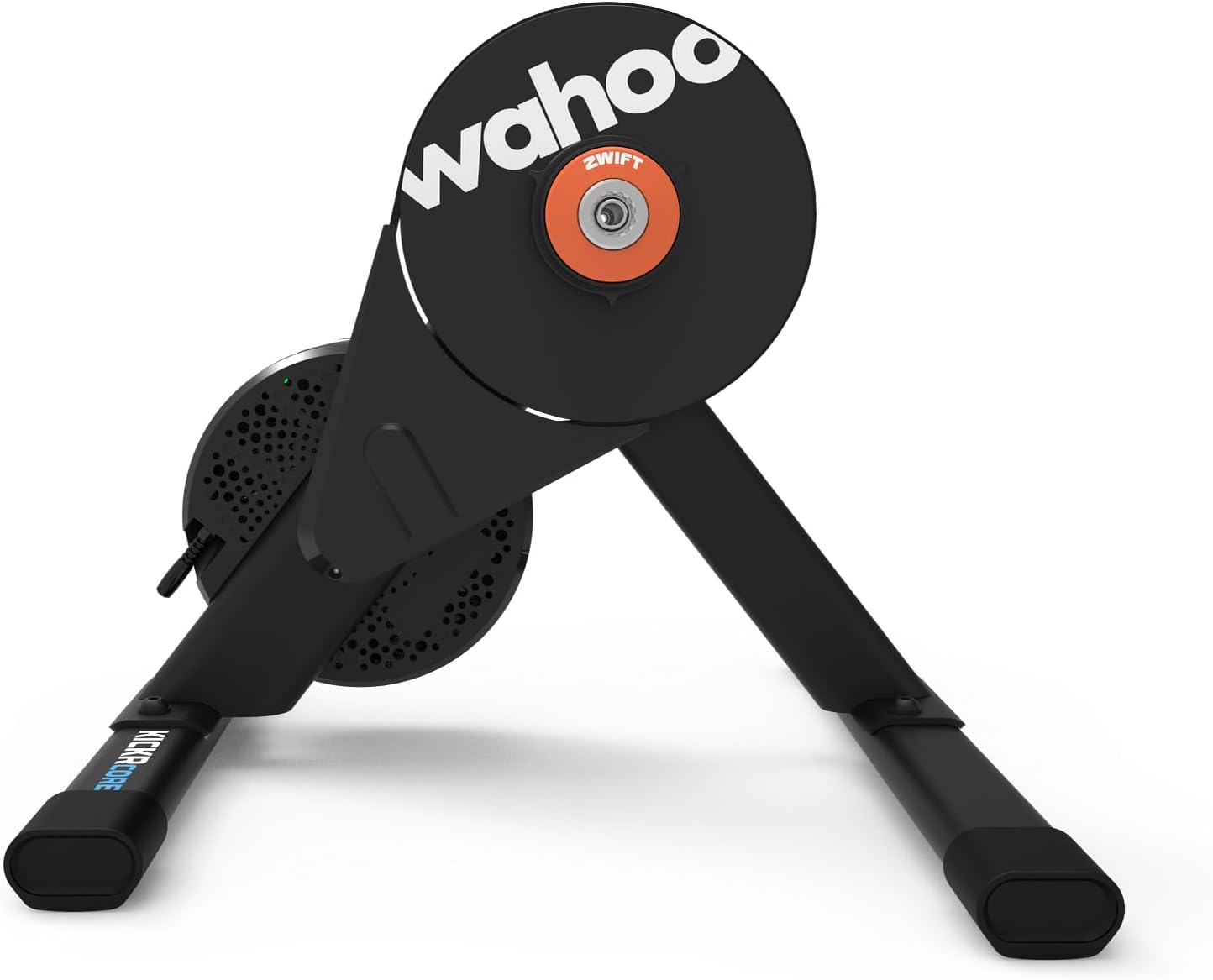
- Power meters and indoor trainers make regular testing accessible.
- Lab-based: MLSS, ventilatory thresholds, lactate curves.
Training Zones Based on FTP
- Endurance (55–75% FTP): improves fat oxidation, capillarization. Long easy miles
- Tempo (76–90% FTP): increases glycogen storage, muscular endurance. Comfortably Hard
- Threshold (91–105% FTP): targets lactate clearance, mitochondrial biogenesis. Riding near FTP
- VO₂max (106–120% FTP): enhances oxygen uptake capacity. Intervals
- Anaerobic Capacity (>120% FTP): improves glycolytic energy contribution and buffering. Maximal effort sprints
Triathlon-Specific Considerations
- Long Course (70.3 & Ironman): athletes often race at 65–80% of FTP on the bike to conserve glycogen for the run. Training at and below threshold is essential for durability.
- Short Course (Sprint & Olympic): higher percentages of FTP are sustained, so training includes more threshold and VO₂max intervals.
How to test your FTP: The 20-minute protocol
The most widely used field test requires a power meter or smart trainer and about 60 minutes total. Here's exactly how to do it:
Step 1 — Warm Up (20 min)
Ride easy for 10 minutes, then do 3 x 1- minute hard efforts (not all-out, just sharp) with 1 minute easy between each.
Spin easy for the final 5 minutes before the test begins.
Step 2 — The 5-Minute All-Out Effort
Ride as hard as you can sustain for exactly 5 minutes.
This clears residual fatigue and primes your system.
Recover easy for 5 minutes after.
Step 3 — The 20-Minute Test
Ride as hard as you can sustain for 20 minutes.
Aim for even pacing — going out too hard is the most common mistake.
Record your average power for the full 20 minutes.
Step 4 — Calculate Your FTP
Multiply your 20-minute average power by 0.95.
That number is your FTP.
Example: 20-min average = 240W → FTP = 240 × 0.95 = 228W
How Often Should You Test?
Every 6–8 weeks during a training block, or after a recovery week
when you're fresh. Don't test when fatigued — you'll underestimate
your actual threshold and train in the wrong zones.
Ramp Test Alternative:
Most platforms (Zwift, TrainerRoad, Wahoo) offer a ramp test — a progressively harder effort until failure, taking about 20 minutes total.
It's less mentally demanding than the 20-minute test and produces comparable results for most athletes. Good option if pacing a 20-minute effort feels too unpredictable.
Advantages of FTP-Based Training
- Accessibility: No lab equipment required; power meters and smart trainers make it simple.
- Individualization: Zones scale to each athlete’s physiology, removing “one size fits all” intensity prescriptions.
- Specificity: Allows precise targeting of metabolic systems (fat oxidation vs. lactate clearance).
- Progress Tracking: Rising FTP reflects improved endurance physiology and translates to faster race performance.
Limitations and Considerations
- Not a Perfect Proxy: FTP is an approximation of MLSS and can vary with test protocol, fatigue, or environmental conditions.
- Duration Specificity: FTP is best for events lasting 40–70 minutes; longer events (Ironman) rely more on endurance capacity below FTP.
- Holistic Training: Strength training, nutrition, and recovery remain critical alongside FTP-based work.
Key Takeaways
- FTP is arguably the single most useful number for structuring triathlon bike training.
- It helps you train smarter, not just harder.
- It ensures you pace the bike so you can actually run strong after.
Conclusion
Knowing your FTP changes how you race forever. Instead of guessing on the bike and hoping for the best, you have a number — your number — that tells you exactly how hard you can push and still run well. For long course racing especially, the athletes who execute the bike leg at 70-80% of FTP consistently outrun athletes who are fitter but less disciplined. Test it, train with it, and race to it. That's how you stop surviving the run and start racing it.

